Perth, WA
Emergency Water Extraction in Perth
Emergency water extraction in Perth is the first and most important step after a flood, burst pipe or overflowing appliance. The longer water sits, the further it wicks into plaster, skirting, cabinetry and underlay, and the more it costs to fix.
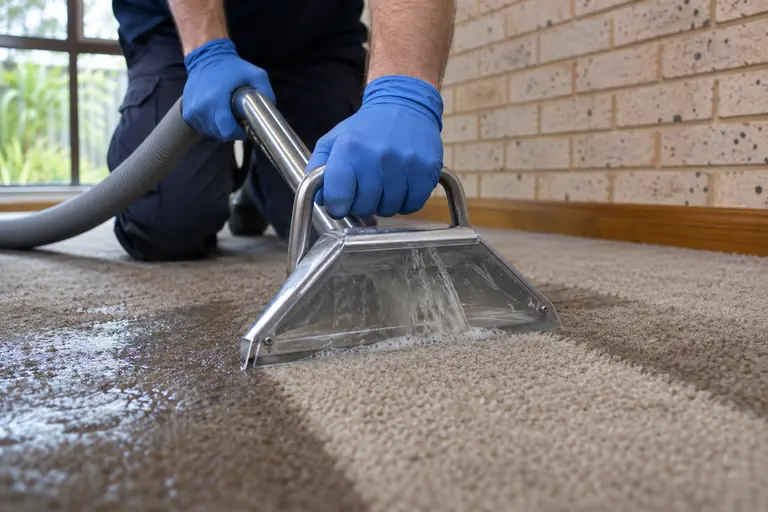
We remove standing water and as much absorbed water as possible from carpets, underlay, tiles and slabs, then set up drying equipment so the rest of the moisture comes out in a controlled way.
What's included in water extraction
- Inspection to confirm the water source has been stopped and the area is safe to enter (power to wet areas isolated if needed)
- Classification of the water as clean, grey or black, which decides what can be saved
- Pumping of standing water and wand or weighted extraction of carpet and underlay
- Moisture mapping of floors and walls, including rooms next to the obvious damage
- Moving furniture off wet floors and blocking it up on foam pads
- Photos and readings for your insurer before anything is removed
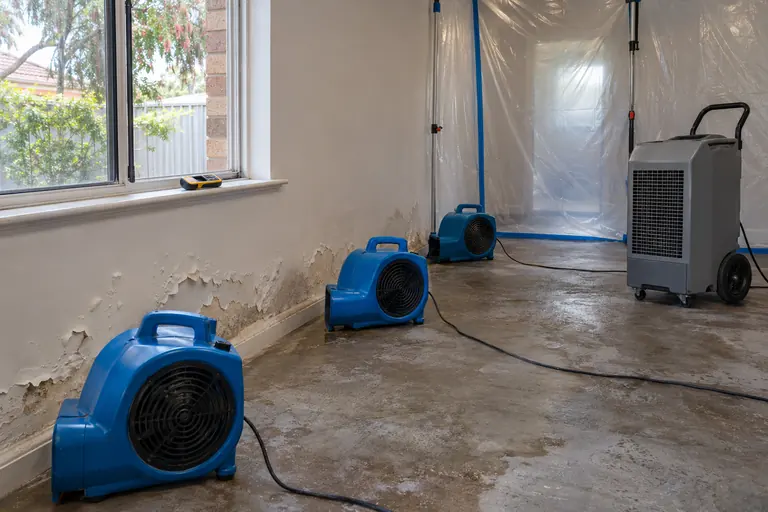
- Set-up of air movers and dehumidifiers for the drying stage
Signs you need professional extraction
A towel and a wet vac can handle a small spill on tiles. Call a restorer when:
- Water has reached carpet. Carpet hides a saturated underlay layer that a domestic vacuum cannot reach.
- Water has run under walls, into built-in robes or under kitchen kickboards.
- The water came from a toilet, sewer, washing machine or outside (grey or black water).
- More than one room is affected, or water has come through a ceiling.
- The floor is still damp to the touch the next day.
Our extraction process
- Stop and make safe. We confirm the source is off (mains tap, appliance valve or roof leak) and check power to wet areas.
- Assess and record. Photos, water category, affected areas and starting moisture readings.
- Extract. Pumps for standing water, then extraction tools for carpet and underlay. Extraction removes far more water than evaporation ever will, which shortens drying.
- Decide what stays. Underlay soaked by clean water can sometimes be dried in place. Anything touched by sewage or contaminated water is removed and bagged.
- Set up drying. Air movers and dehumidifiers placed for your room layout, with a plan for daily checks.
Clean, grey and black water compared
The IICRC S500 standard sorts water into three categories by contamination. The category decides what we can save and what has to go.
| Category | Typical Perth sources | What it usually means |
|---|---|---|
| Category 1 (clean) | Burst supply pipe, leaking flexi hose, hot water system | Carpet and underlay can often be dried in place if extraction starts quickly |
| Category 2 (grey) | Washing machine or dishwasher overflow | Underlay is usually replaced; carpet cleaned and sanitised |
| Category 3 (black) | Sewage, toilet overflow from beyond the trap, outside floodwater | Porous materials removed; area cleaned and sanitised before drying |
Clean water does not stay clean. As it sits and picks up contaminants from building materials, its category can be upgraded, which is one more reason to extract early.
What affects the cost of extraction
We quote after seeing the job, because two burst pipes can create very different amounts of work. The main factors are:
- How many rooms and square metres are wet
- Water category (clean water costs less to deal with than sewage)
- Floor types: carpet and underlay, timber, tiles or bare slab
- How long the water has been sitting
- How many days of drying equipment are needed afterwards
If you are claiming on insurance, your insurer may approve the work directly. Ask us about this when you call.
Water extraction in Perth homes
Most Perth houses sit on a concrete slab with double brick walls (UDIA WA). Water cannot drain away through a subfloor the way it can under a timber-framed house, so it pools on the slab, gets under floating floors and soaks into the base of internal brick walls. That makes fast extraction more important here, not less. Winter is the busy season: July is historically Perth's wettest month, averaging around 148 mm (Weatherzone), and roof and gutter overflows peak when a cold front stalls over the city.
Why choose us for emergency water extraction in Perth
Moisture readings, not guesswork
Water travels further than it looks. It wicks up plaster, runs under skirting and soaks into the underlay beneath dry-looking carpet. Every job starts with moisture readings across the affected rooms and the rooms next to them, so we dry what is actually wet and stop when the readings say the structure is dry, not when it feels dry. The IICRC S500 standard, the reference most Australian restorers and insurers work from, sets drying goals by measured moisture rather than by touch.
Paperwork your insurer can use
Most water damage in Perth ends up as an insurance claim, and claims move faster with evidence. We photograph the damage before anything is moved, record the cause, log readings each visit and note what was removed and why. That record matters: the Insurance Council of Australia notes that insurers may assess how water entered a home to decide which part of a policy applies (ICA).
Built around Perth homes
Perth builds differently to the eastern states. Most homes here are double brick on a concrete slab, which means water sits in the cavity and the slab rather than draining through a timber subfloor. Drying a double brick wall or a slab takes different equipment and more time than a stud wall (UDIA WA notes that double brick dominates Perth housing construction). We plan the drying around how your home is actually built.
Emergency Water Extraction questions
How quickly should water be extracted?
As soon as the source is stopped and it is safe to enter. Water keeps wicking into walls, skirting and underlay for as long as it sits, and clean water can become contaminated over time, so the first hours make the biggest difference to what can be saved.
Can I just use a wet vac?
A wet vac is fine for a small spill on tiles. It cannot pull water out of saturated underlay or out of a slab, so if carpet or more than one room is wet, professional extraction and drying is usually needed to prevent odour and mould.
Will my carpet need to be replaced?
Not always. Carpet soaked by clean water and extracted quickly can often be dried in place. Underlay is replaced more often, and anything soaked by sewage or grey water is normally removed.
Do I need to call my insurer first?
Stop the water and make the area safe first. Then contact your insurer as soon as you can. Take photos before anything is moved, and keep damaged items until your insurer says you can dispose of them.
Related services
Structural Drying
Dehumidifiers, air movers and cavity drying for slabs, brick walls, cabinetry and ceilings.
Learn more →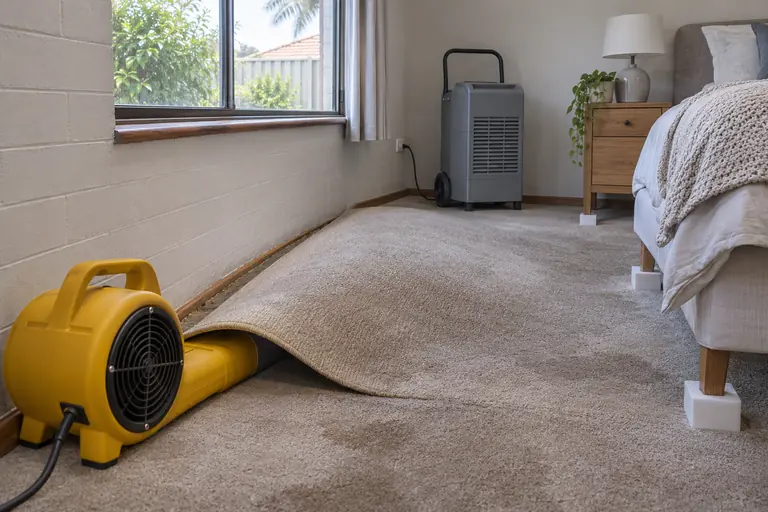
Wet Carpet Drying
Carpet and underlay extracted, dried in place where possible, and sanitised to stop odour.
Learn more →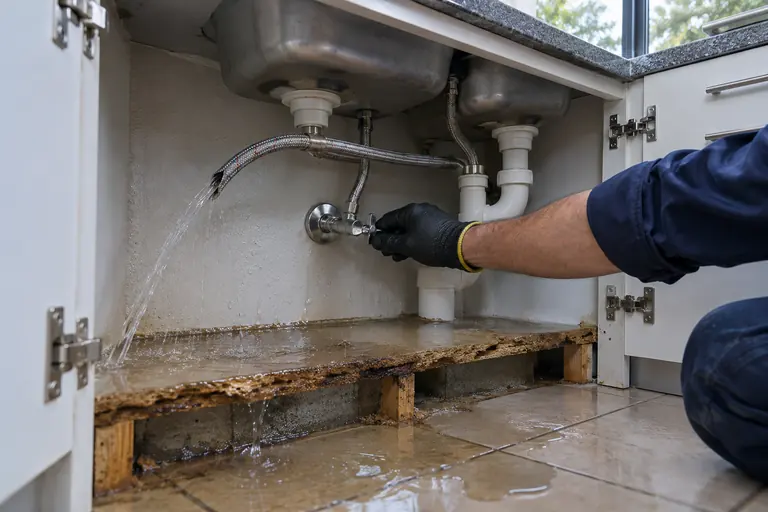
Burst Pipe Water Damage
Drying and repair prep after burst supply pipes, leaking flexi hoses and hot water system failures.
Learn more →Questions first? See our water damage questions, the insurance claims guide, how we work or contact us.
Got water where it shouldn't be?
Water damage gets worse by the hour. Call now or send your details and we'll call you back.
Call (08) 6263 6253