Perth, WA
Storm Damage and Roof Leaks in Perth
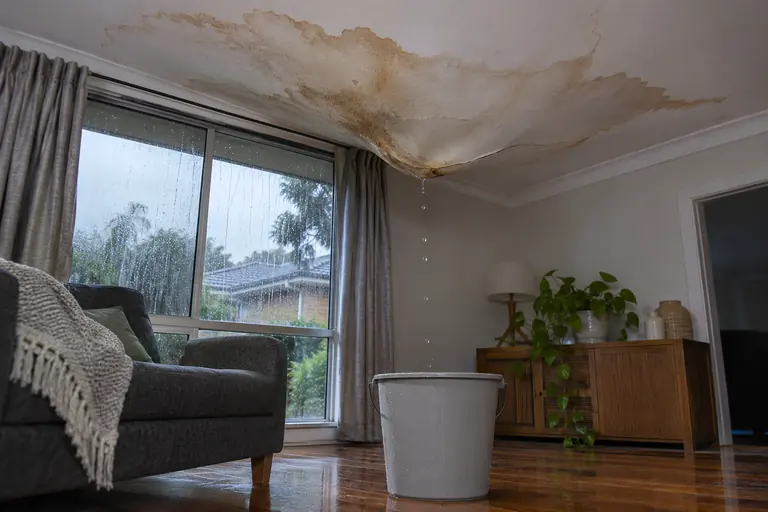
Storm water damage in Perth usually comes through the roof. Blocked box gutters overflow into ceilings, wind-driven rain gets under broken tiles or flashings, and heavy falls push water under doors. By the time a ceiling stains or sags, insulation and plasterboard above may be saturated.
Once the roof is made watertight by a roofer or the SES, we dry the ceiling, walls and floors and record the damage for your insurer.
If water is coming through the ceiling
- Keep clear of a sagging ceiling. Wet plasterboard is heavy and can collapse.
- Turn off power to lights and fans in the affected area at the switchboard if it is safe to do so.
- Catch the water with buckets and move furniture and electronics away.
- Call the SES on 132 500 for emergency roof tarping in a storm, or a roofer for urgent repairs.
- Photograph the ceiling, roof (from the ground) and damaged contents.
- Call us to dry the ceiling, insulation, walls and floors.
What's included
- Inspection of ceiling, roof space insulation, walls and floors for moisture
- Removal of saturated insulation and failed ceiling sections where needed
- Extraction of water from carpets and floors
- Drying of ceiling cavities, walls and slabs
- Mould prevention treatment where moisture has sat
- Records for your insurer and your repair trades
Signs of storm water damage
- Brown rings or stains on the ceiling
- Sagging or bulging ceiling plasterboard
- Peeling paint near cornices
- Water around light fittings or exhaust fans
- Damp carpet along external walls or doorways
- Musty smell after rain
Our process
- Confirm the roof is watertight. Drying starts once the leak is stopped or tarped.
- Assess. Readings on ceilings, walls and floors, and a check of the roof space where it is safe to access.
- Remove failed materials. Saturated insulation and ceiling sections that have sagged or lost strength.
- Dry. Ceiling cavity drying, dehumidifiers and air movers in affected rooms.
- Sign off. Final readings so the ceiling can be repaired and painted.
Storm damage and insurance
There is no standard definition of storm in Australian home insurance, so each insurer defines it in its policy (CHOICE). Policies may also treat damage from poor maintenance, such as long-blocked gutters, differently from sudden storm damage. Check your product disclosure statement. We record the point of entry and the extent of the damage to support your claim.
What affects the cost
- How much ceiling and insulation is affected
- Whether walls and floors are also wet
- Roof space access
- Drying days needed
Storms in Perth
Perth's damaging storms come mostly with winter cold fronts. In May 2020, a system from ex-Tropical Cyclone Mangga combined with a cold front; the SES responded to more than 500 requests for help, mostly in Perth, with significant damage reported in southern suburbs including Canning Vale, Lynwood and Thornlie (ABC News). Older homes with box gutters, flat roof sections or tile roofs with cracked ridge capping are the most common sources of ceiling leaks during heavy rain.
Why choose us for storm damage and roof leaks in Perth
Moisture readings, not guesswork
Water travels further than it looks. It wicks up plaster, runs under skirting and soaks into the underlay beneath dry-looking carpet. Every job starts with moisture readings across the affected rooms and the rooms next to them, so we dry what is actually wet and stop when the readings say the structure is dry, not when it feels dry. The IICRC S500 standard, the reference most Australian restorers and insurers work from, sets drying goals by measured moisture rather than by touch.
Paperwork your insurer can use
Most water damage in Perth ends up as an insurance claim, and claims move faster with evidence. We photograph the damage before anything is moved, record the cause, log readings each visit and note what was removed and why. That record matters: the Insurance Council of Australia notes that insurers may assess how water entered a home to decide which part of a policy applies (ICA).
Built around Perth homes
Perth builds differently to the eastern states. Most homes here are double brick on a concrete slab, which means water sits in the cavity and the slab rather than draining through a timber subfloor. Drying a double brick wall or a slab takes different equipment and more time than a stud wall (UDIA WA notes that double brick dominates Perth housing construction). We plan the drying around how your home is actually built.
Storm Damage and Roof Leaks questions
Who do I call first in a storm?
If the roof is damaged and water is coming in, call the SES on 132 500 for emergency help, or a roofer. Once the roof is watertight, call a restorer to dry the ceiling, walls and floors.
Does a wet ceiling need replacing?
Not always. Plasterboard that has stained but kept its shape can often be dried and repainted. Sagging, soft or crumbling ceiling sections are replaced because they can fall.
What about wet insulation?
Saturated batts lose their insulating value and hold water against the ceiling. They are usually removed so the ceiling can dry, then replaced once it is dry.
Is storm damage covered by insurance?
Most home policies cover storm damage, but definitions vary between insurers and damage linked to poor maintenance may be treated differently. Check your policy and talk to your insurer.
Related services
Flood Damage Restoration
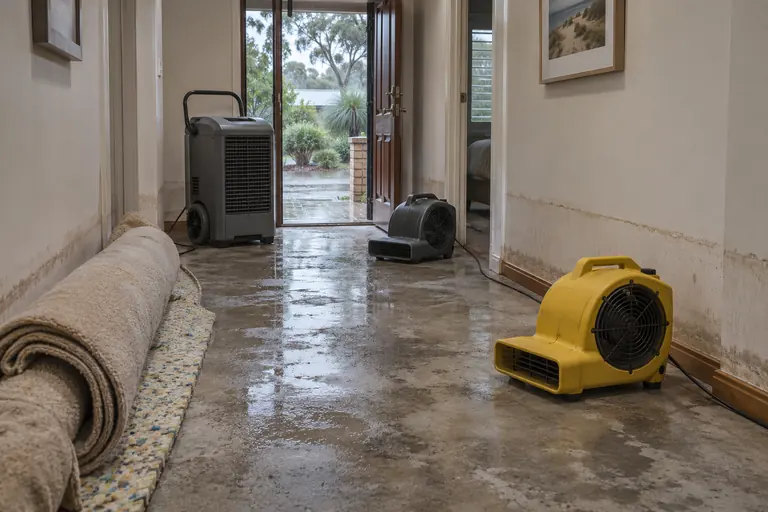
Full clean-up and restoration after floodwater, storm runoff or major internal flooding.
Learn more →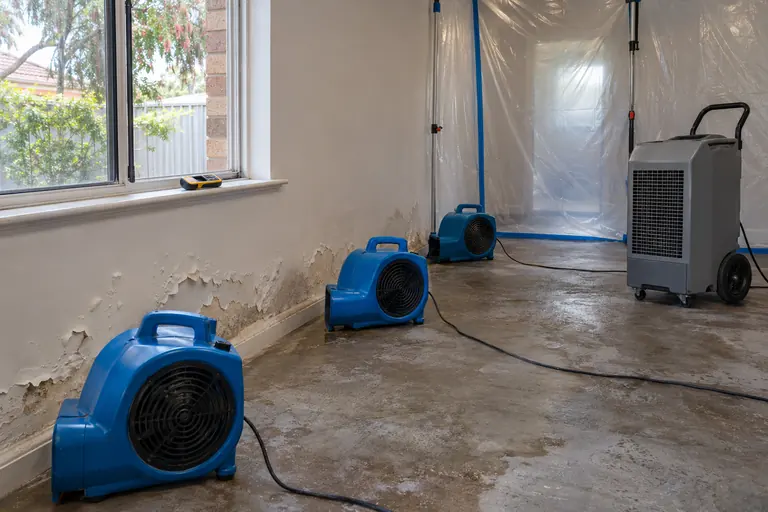
Structural Drying
Dehumidifiers, air movers and cavity drying for slabs, brick walls, cabinetry and ceilings.
Learn more →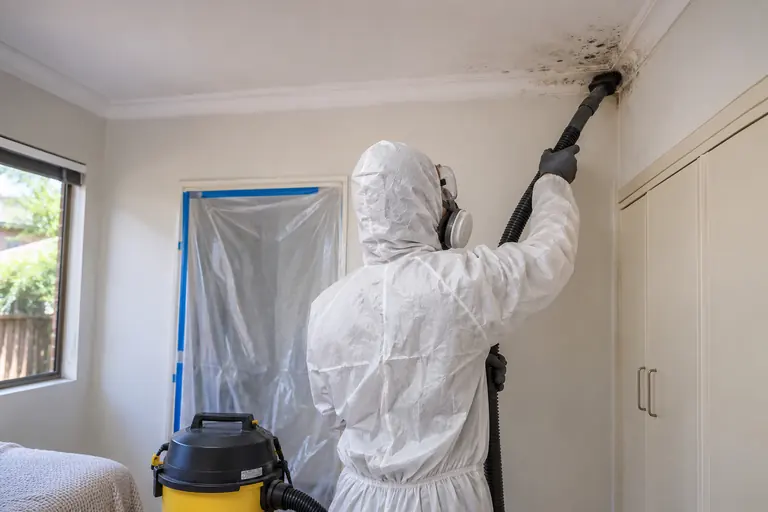
Mould Removal
Mould removal and remediation after leaks and damp, with the moisture source found and fixed.
Learn more →Questions first? See our water damage questions, the insurance claims guide, how we work or contact us.
Got water where it shouldn't be?
Water damage gets worse by the hour. Call now or send your details and we'll call you back.
Call (08) 6263 6253