Perth, WA
Structural Drying in Perth
Structural drying in Perth means drying the building itself, not just the carpet. After water damage, moisture is held inside slabs, brick, plaster, timber and cabinetry. If it is left there, you get swelling, delamination, paint failure, odour and mould, often weeks after the leak looked fixed.
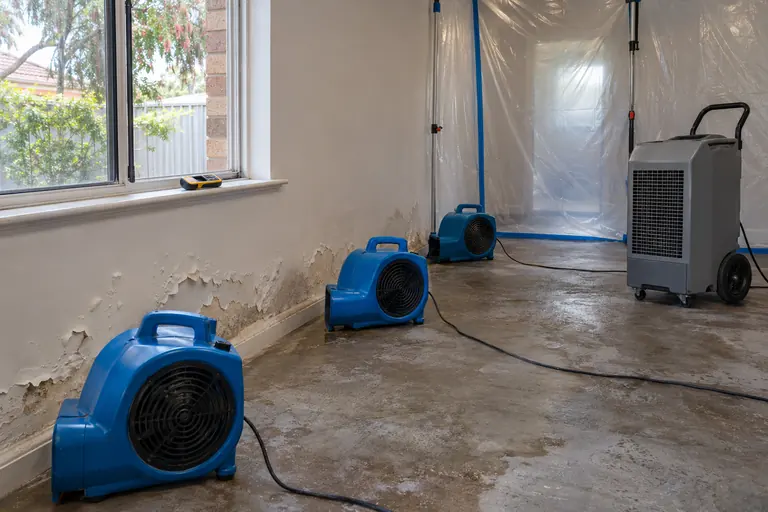
We use dehumidifiers, air movers and targeted cavity drying, and we measure progress at each visit so the job finishes when the readings say dry.
What's included
- Moisture mapping of every affected material
- A drying plan matched to the materials and room layout
- Refrigerant or desiccant dehumidifiers sized to the space
- Air movers positioned to move moist air off wet surfaces
- Cavity and injection drying for walls, cabinetry and ceilings where needed
- Containment with plastic sheeting to dry a smaller area more efficiently
- Readings logged at each visit, with a final dry report
Signs a structure is still wet
- Paint or render blistering after the surface looks dry
- Tiles drummy or grout staying dark
- Cabinet bases or kickboards swelling
- Timber floors cupping or crowning
- Condensation on windows in an affected room
- Musty smell in a closed room
How we dry a building
- Measure. Starting readings on each material, plus readings on similar dry material elsewhere in the home as a target.
- Remove what blocks drying. Vinyl, some floating floors and sealed finishes trap water and may need lifting.
- Control the air. Contain the area, then run dehumidifiers and air movers together. Air movers lift moisture off surfaces and dehumidifiers take it out of the air.
- Target cavities. Inject dry air into wall cavities, under cabinets or into ceiling voids.
- Monitor. Readings at each visit, with equipment moved as areas dry.
- Sign off. When readings match the dry target, we remove equipment and issue a dry report.
Materials compared
| Material | How it holds water | Drying notes |
|---|---|---|
| Concrete slab | Absorbs and releases slowly | Often the slowest part of the job; dehumidification and time |
| Double brick wall | Wicks up from the base; cavity holds damp air | Cavity ventilation or injection drying |
| Plasterboard | Absorbs fast, swells and loses strength | Dried if sound; replaced if swollen or contaminated |
| Particleboard cabinetry | Swells permanently when saturated | Kickboards removed to dry underneath; swollen panels replaced |
| Timber floors | Cups as boards absorb from below | Specialist floor drying; may settle back if dried early |
What affects the cost
- Materials involved (slabs and brick take longer)
- Number of rooms and volume of air
- Number and type of machines
- Number of drying days and visits
Equipment hire per day makes up much of a drying bill, so getting the drying plan right early saves money.
Structural drying in Perth
Double brick on a slab is the dominant way Perth homes are built, unlike the eastern states where timber frame is common (UDIA WA). Brick and concrete hold far more water than a stud wall and release it slowly. In the Perth Hills, winter rainfall runs well above the coastal plain: in July 2023, totals were 100 to 130 mm across the Swan Coastal Plain and 160 to 200 mm in the Hills (BoM). Cool, wet air outside means windows-open drying does little in winter, so mechanical dehumidification does the work.
Why choose us for structural drying in Perth
Moisture readings, not guesswork
Water travels further than it looks. It wicks up plaster, runs under skirting and soaks into the underlay beneath dry-looking carpet. Every job starts with moisture readings across the affected rooms and the rooms next to them, so we dry what is actually wet and stop when the readings say the structure is dry, not when it feels dry. The IICRC S500 standard, the reference most Australian restorers and insurers work from, sets drying goals by measured moisture rather than by touch.
Paperwork your insurer can use
Most water damage in Perth ends up as an insurance claim, and claims move faster with evidence. We photograph the damage before anything is moved, record the cause, log readings each visit and note what was removed and why. That record matters: the Insurance Council of Australia notes that insurers may assess how water entered a home to decide which part of a policy applies (ICA).
Built around Perth homes
Perth builds differently to the eastern states. Most homes here are double brick on a concrete slab, which means water sits in the cavity and the slab rather than draining through a timber subfloor. Drying a double brick wall or a slab takes different equipment and more time than a stud wall (UDIA WA notes that double brick dominates Perth housing construction). We plan the drying around how your home is actually built.
Structural Drying questions
How long does structural drying take?
It depends on the materials, how much water got in and how quickly drying started. Plasterboard and carpet dry faster than a concrete slab or double brick. We measure at each visit rather than working to a fixed number of days.
Why do I need dehumidifiers and fans?
Air movers lift moisture off wet surfaces into the air, and dehumidifiers remove it from the air. Fans alone just move damp air around and can push moisture into other rooms.
Can I turn the equipment off at night?
Please leave it running unless we say otherwise. Turning it off slows drying and can extend the job. Let us know if noise is a problem and we will look at the layout.
How do you know when it's dry?
We compare readings on the affected materials with readings on the same materials in an unaffected part of the home. When they match, the structure is dry.
Related services
Emergency Water Extraction
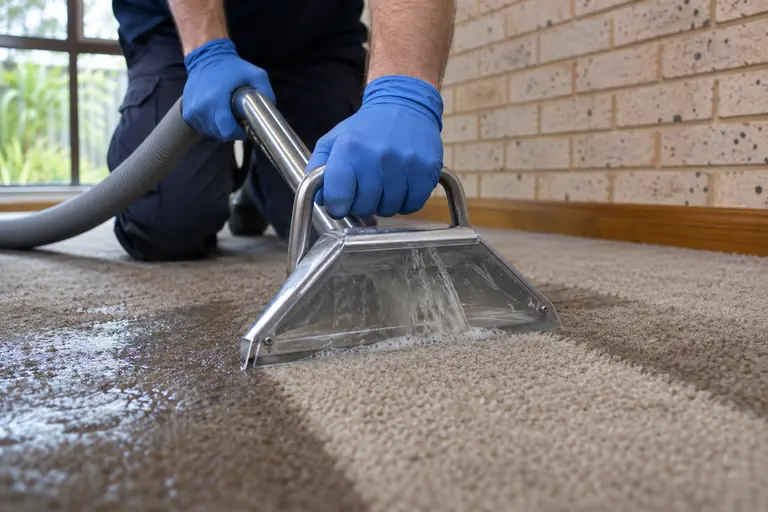
Standing water pumped and extracted from floors, carpets and slabs before it soaks in further.
Learn more →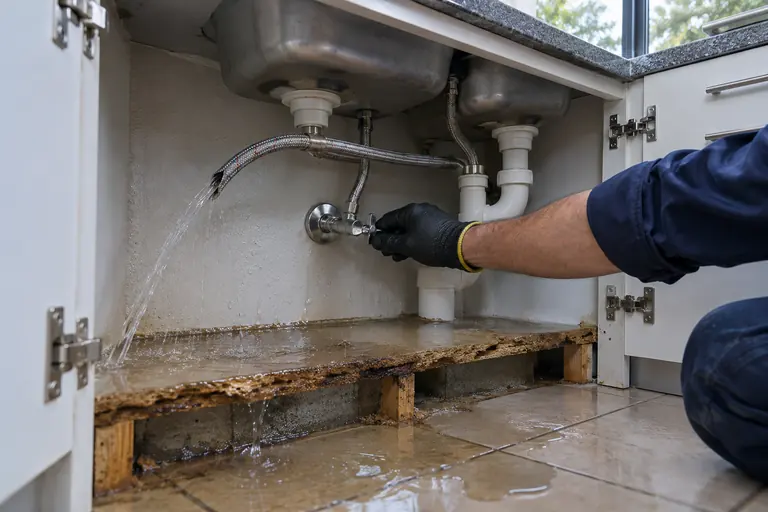
Burst Pipe Water Damage
Drying and repair prep after burst supply pipes, leaking flexi hoses and hot water system failures.
Learn more →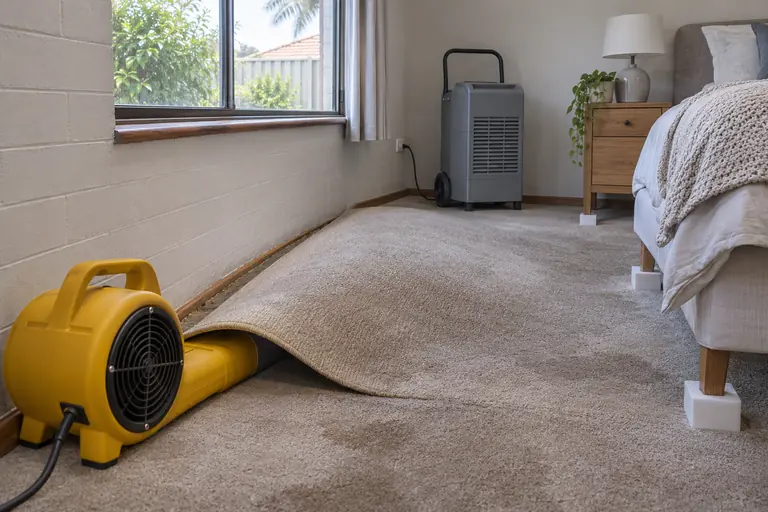
Wet Carpet Drying
Carpet and underlay extracted, dried in place where possible, and sanitised to stop odour.
Learn more →Questions first? See our water damage questions, the insurance claims guide, how we work or contact us.
Got water where it shouldn't be?
Water damage gets worse by the hour. Call now or send your details and we'll call you back.
Call (08) 6263 6253